

Project completed: P067_Ethiopia
Sonic Ethnographies and the Second Italo-Ethiopian War. A Restitution Project
Cooperating countries: Ethiopia and Austria
Coordinating institution: University of Innsbruck, Giovanni Chiriaco, Giovanni.chiriaco@uibk.ac.at
Partner institution: Bahir Dar University
Project duration: 1 May 2022 - 30 April 2024
Budget: EUR 19.400
Abstract:
The project aims to investigate the role of music and songs in shaping and chronicle cultural encounters within the context of the second Italo-Ethiopian war, here intended as a period of five years including both the invasion of Ethiopia and its military occupation.
As part of the fascist project of occupation, the Italian military and political leaders as well as scholars and civilians based in Ethiopia showed interest in Ethiopian culture, and specifically in local music. Like many aspects of the violent occupation, the interest was twofold. On the one hand, Italians understood that music was a form of expression that escaped their control, therefore they persecuted and killed many azmari and other musicians, in particular in 1937, as part of the infamous reprisal. On the other hand, both musical instruments and sounds were collected. In particular, sound records in the form of 78rpm vinyls were produced, both intended for institutional archive in Italy and for commercial distribution. As a result, a significant archive of records as well as an official monography on Ethiopian music in Italian were published within a short period of time.
The project aims to deeply analyze the sound collections and the published book in order to: 1) reconstruct both the historical and cultural background in which the collections emerged; 2) compare the material with later features of cultural production; 3) develop a project of restitution of the collections that can make it relevant for contemporary local communities.
Summary:
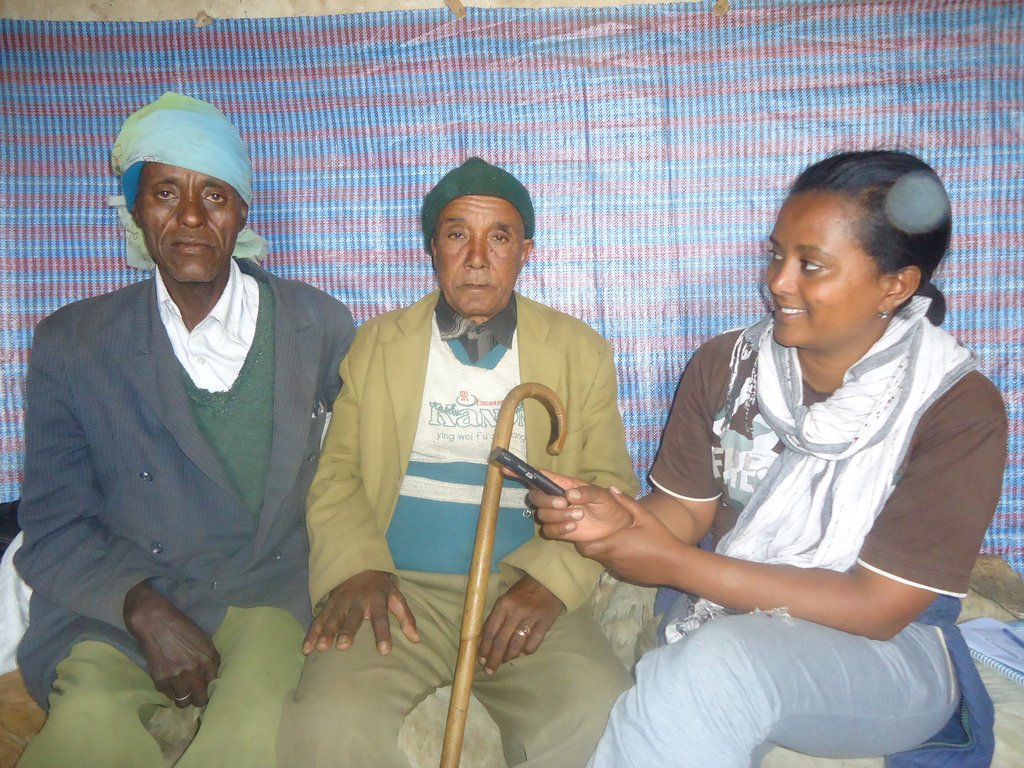
The project aimed to investigate the role of music and songs in shaping and chronicling cultural encounters within the context of the second Italo-Ethiopian war, intended here as the period spanning between the start of invasion of Ethiopia by the fascist army (October 2nd 1936) and the end of its military occupation in May 1941. The project adopted a twofold methodology that included both archival research and ethnographic fieldwork. In addition, participative approaches have been also incorporated, in order to make the research relevant for the contemporary socio-political situation.
From the perspective of the research, the aforementioned historical period is characterized by two different phases. During the first phase, 1935-1937, the violent conflict impacted musicians in many ways. Research has identified: 1. names and short biographies of musicians who were with the Ethiopian army during the armed conflict; 2. songs that emerged during the war, that chronicled the battles and narrated the acts of warriors; 3. Italian documents attesting the chase of Ethiopian musicians, as the occupying government understood their social role.
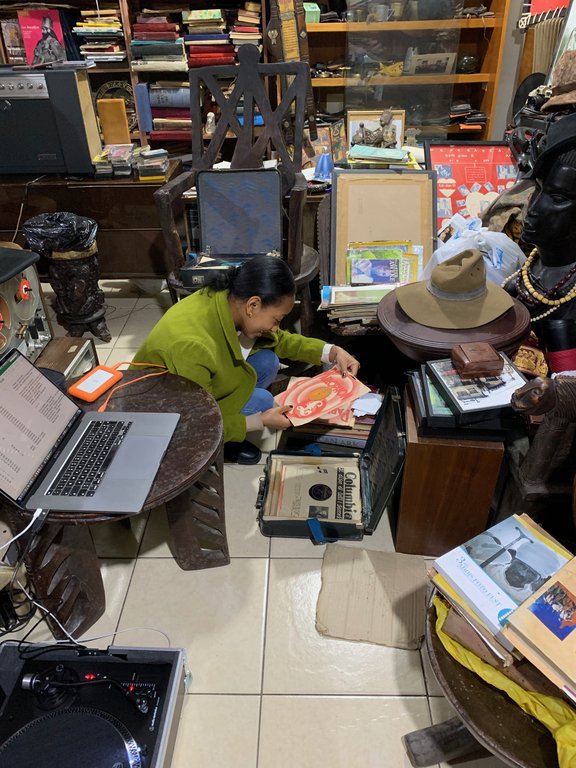
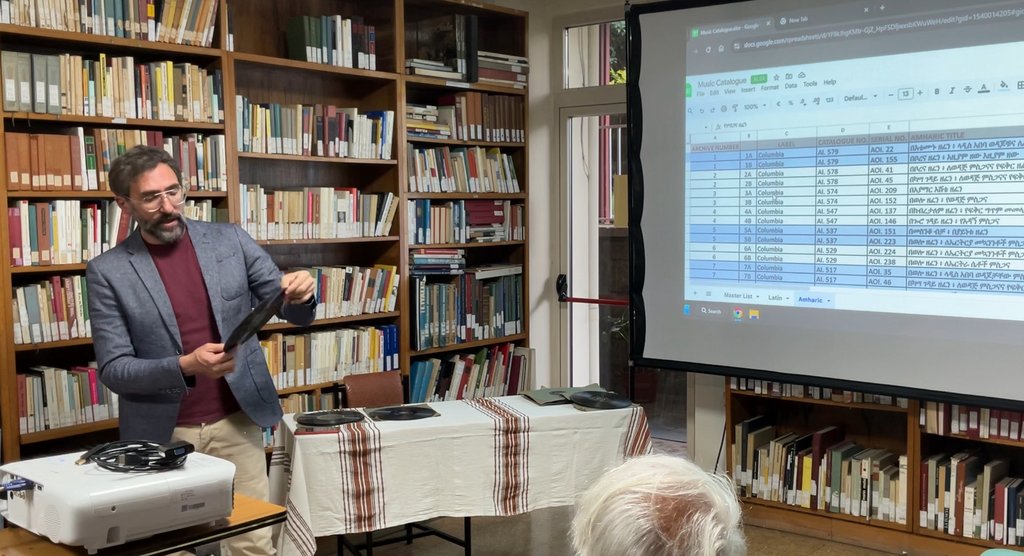
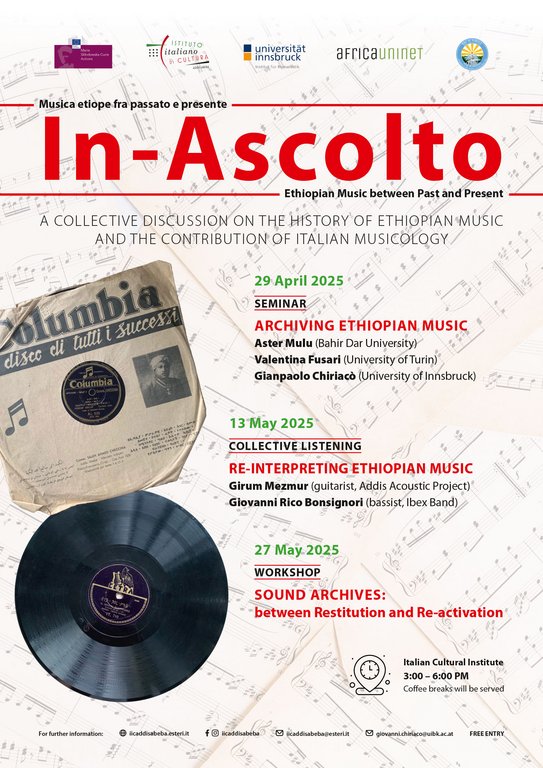
In the second phase, starting roughly at the beginning of 1938, many previously confined musicians were freed and they could move back to the capital of Addis Ababa. There, a new interest in music was documented by collections recorded with the help of Italian army and later produced by Italian music labels, mainly the Italian section of Columbia. The recording campaign resulted in about 200 records in the format of 78rpm shellacs. The inception of World War II abruptly interrupted the publication of records. As a consequence, no archive kept the entire collections and only private collectors and little shops have some of the original 78rpm.
Through a long and thorough search, the project was able to identify and digitize about 160 of the dispersed 200records and made them available to musicians, with two significant results that emerged from that: 1) researchers were able to compare the music recorded at the time of the Italian presence with the songs that the ethnographic research identified as pieces about the Italo-Ethiopian war that are still performed nowadays; 2) young musicians who are studying the tradition on some of the most important local instruments (such as masenqo and beguena) have now the opportunity to listen to the original records of the musicians whose life they study on books, as the entire archive will be donated to the Ethiopian National Archive.
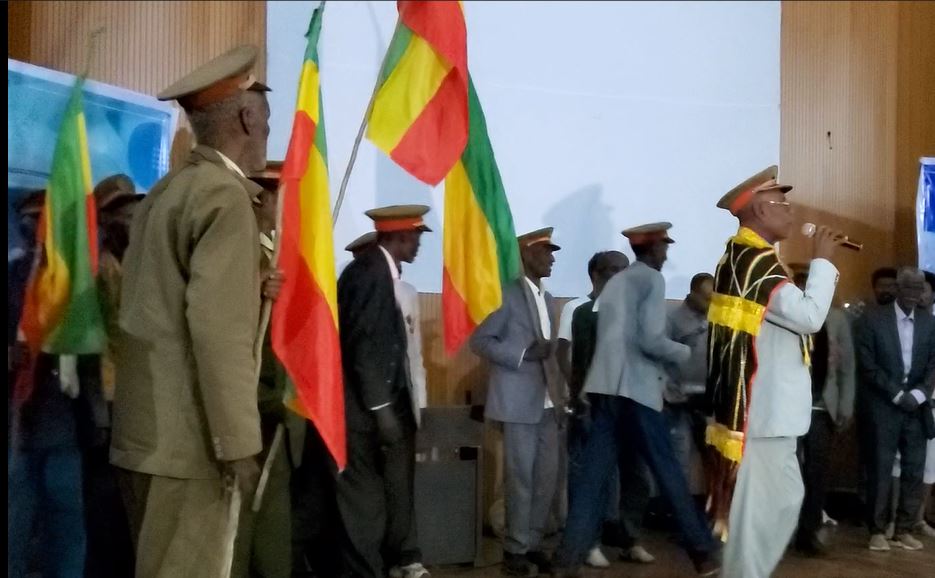
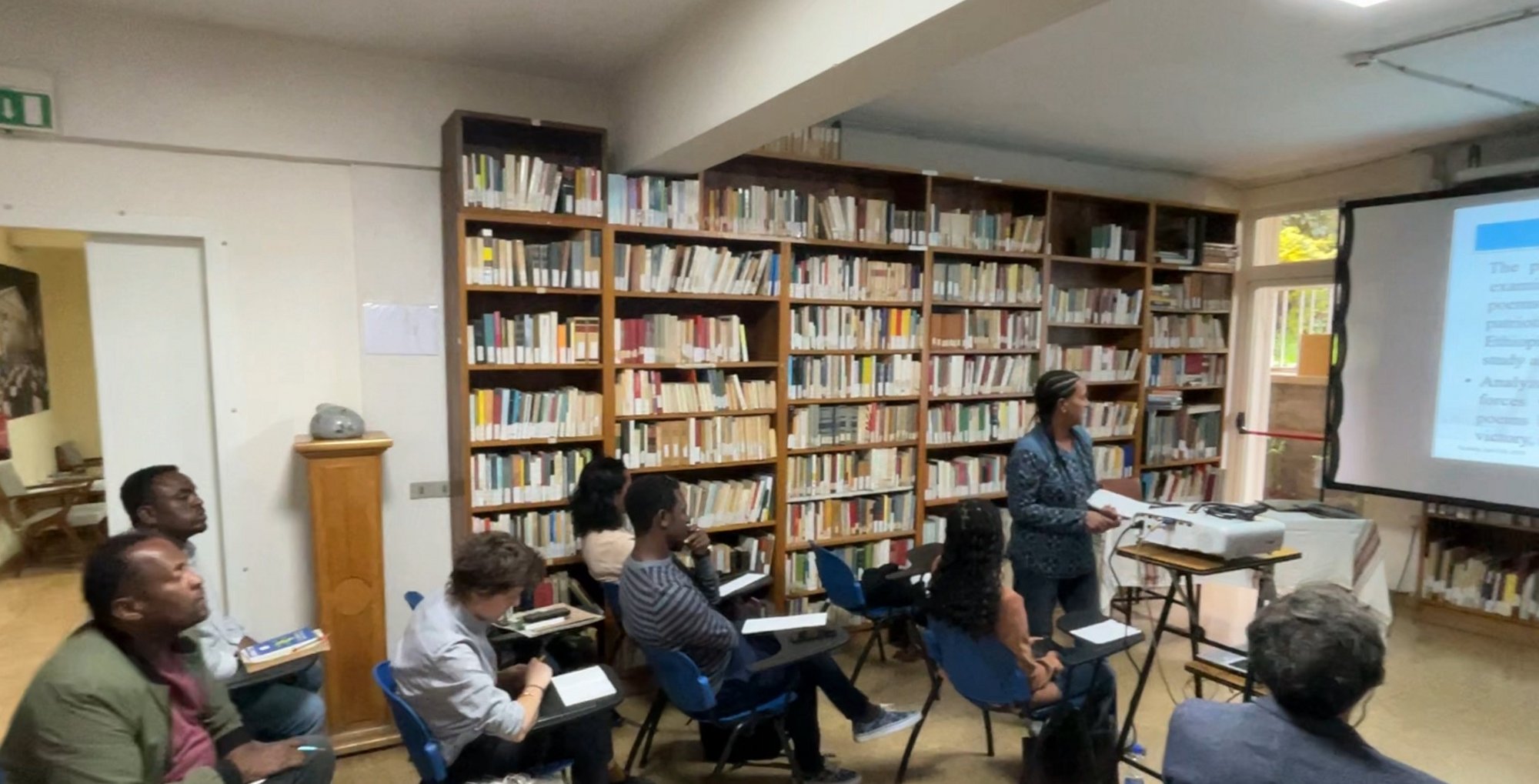
Furthermore, the project dedicated some important time to collective evaluation of the results. Through a series of three events, musicians, students and music lovers could be reached, so that they could appreciate the results of both ethnographic documentation and archival research. This was also particularly relevant at the time of ethnic and social conflict which Ethiopia is enduring right now. By getting to know the quality and the intensity of musical expressions produced during the war, some hope for the future could be found.