




Project completed: P089_Gabon
Pathogen surveillance through wastewater in Gabon
Cooperating countries: Gabon and Austria
Coordinating institution: Medical University of Vienna, Andreas Bergthaler, andreas.bergthaler@meduniwien.ac.at
Partner institutions: Centre de Recherches Médicales de Lambaréné
Project duration: 1 August 2023 - 31 July 2025
Budget: EUR 18.660
Abstract
Wastewater-based epidemiology (WBE) has proven to be a valuable tool for pandemic management. So far, its application is mostly thriving in urban regions of high-income countries. In this proposed project we will establish a collaboration between the Institute of Hygiene and Applied Immunology of the Medical University of Vienna (MedUni Vienna), Austria and the Centre de Recherches Médicales de Lambaréné (CERMEL), Gabon to foster the use of WBE methodology in Gabon for SARS-CoV-2 monitoring and as a further tool employed in the pandemic preparedness efforts. To this end we plan to transfer established expertise to detect, quantify and genetically characterize viruses from wastewater. These methods can be readily applied on the campus of the Albert Schweitzer Hospital with its centralized wastewater infrastructure and its co-location with CERMEL. Furthermore, we will jointly develop further the existing methodology to adapt it to two parameters which limit the application of WBE on a global scale: This includes i) the analysis of wastewater samples from non-centralized infrastructure, e.g., pit latrines or receiving waters, and ii) adapted methodology that can be employed in rural parts without sophisticated laboratory infrastructure. Towards the end of this project, we aim to engage with stakeholders from Gabon and the Central African region and disseminate newly developed techniques during an on-site workshop to promote the usage of WBE in Africa.
Summary
This project introduced wastewater-based epidemiology (WBE) as a novel tool for pathogen surveillance in Gabon through a collaboration between the Medical University of Vienna, TU Wien, and the Centre de Recherches Médicales de Lambaréné (CERMEL) in Gabon. The initiative aimed to transfer established WBE methodologies for detecting SARS-CoV-2 and Rotavirus A in hospital wastewater and to explore their applicability in community settings with non-centralized sanitation infrastructure.
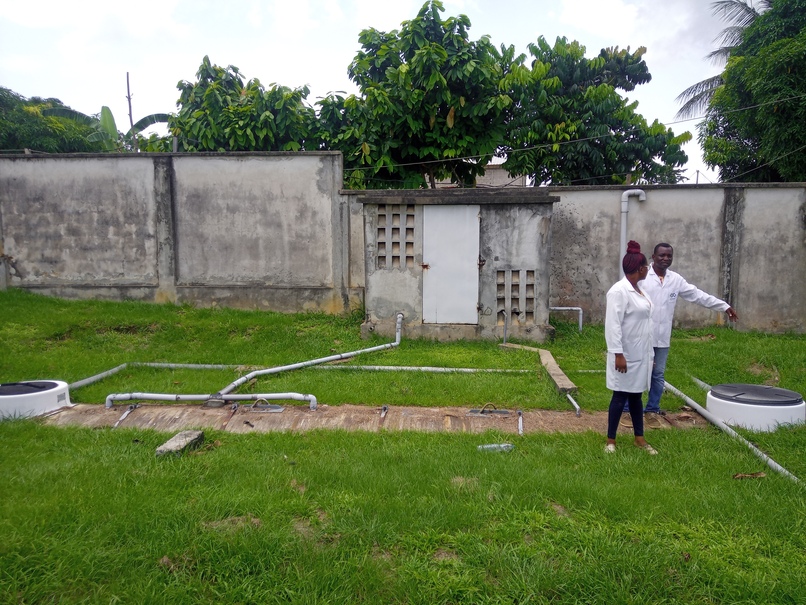
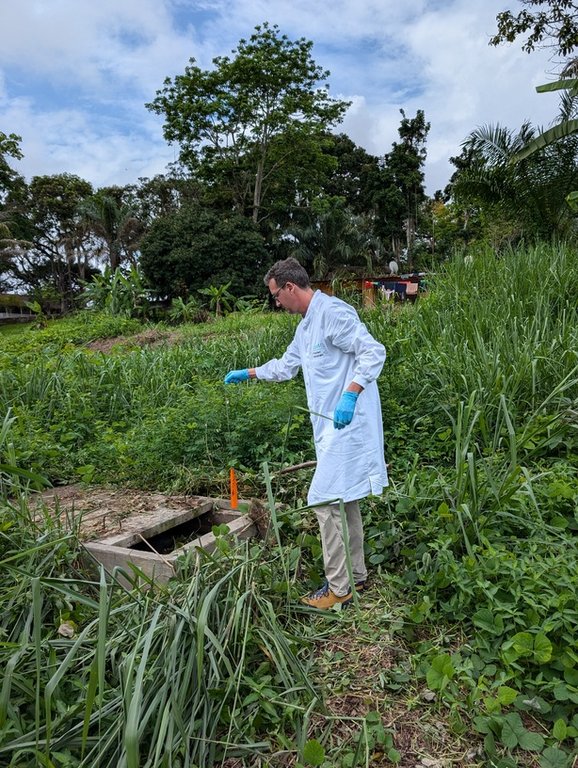
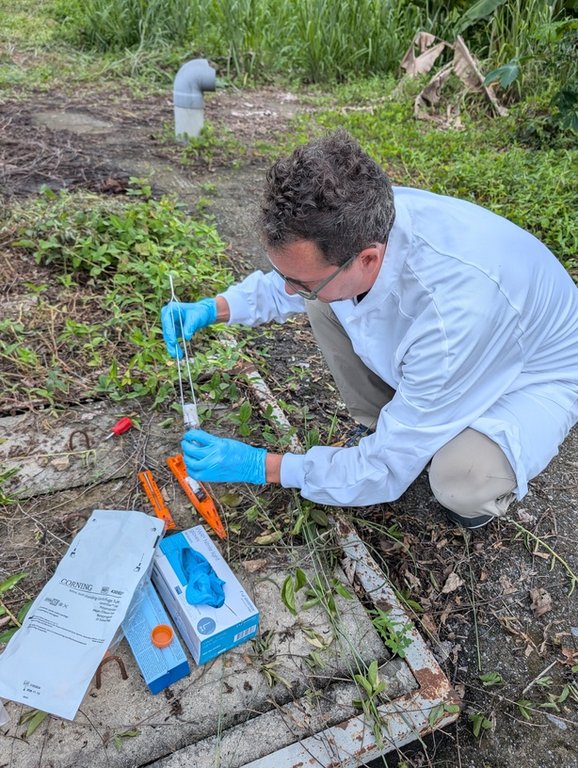
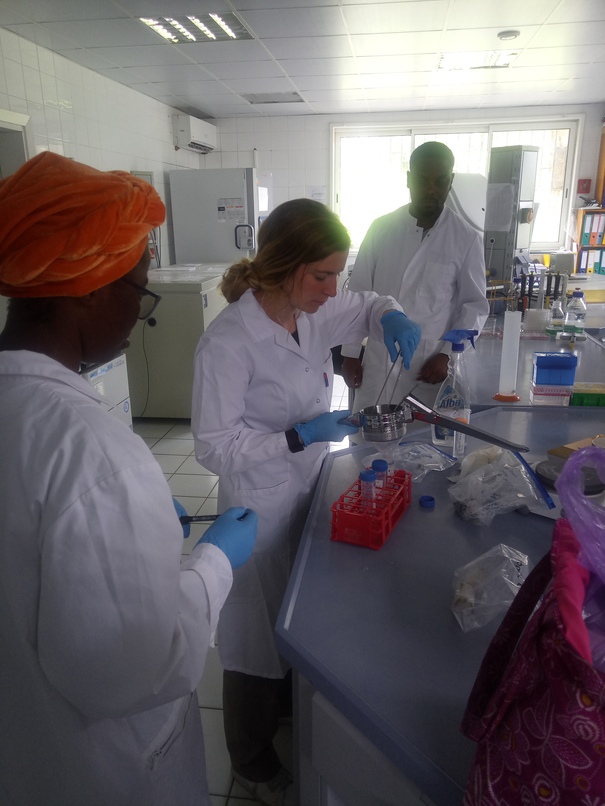
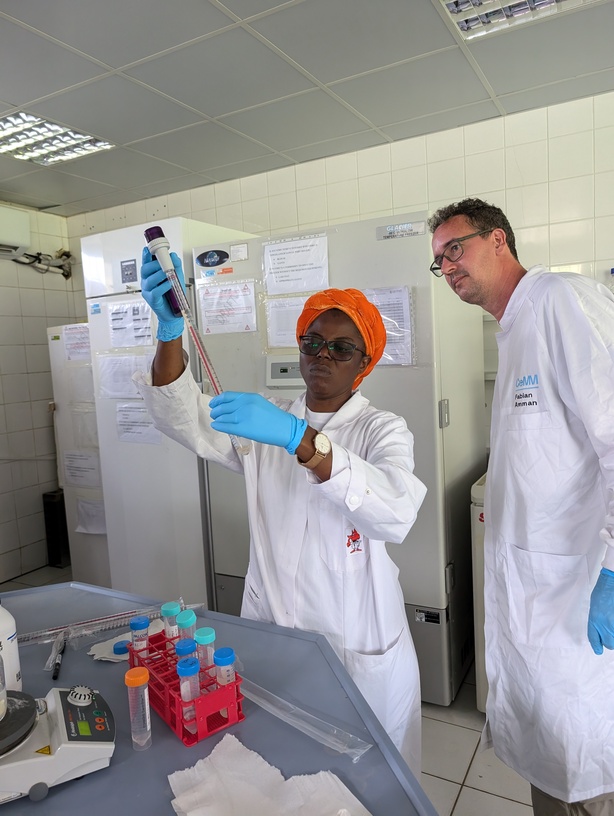
The first phase focused on hospital wastewater systems at the Albert Schweitzer Hospital and the Centre Hospitalier Régional Georges Rawiri, due to their available local wastewater infrastructure. Sampling strategies, i.e., small scale passive samplers, were implemented alongside virus concentration techniques, i.e. polyethylene glycol (PEG) precipitation, were established. Subsequent qPCR analysis confirmed the presence of Rotavirus A in hospital wastewater, demonstrating the feasibility of WBE in this controlled environment.
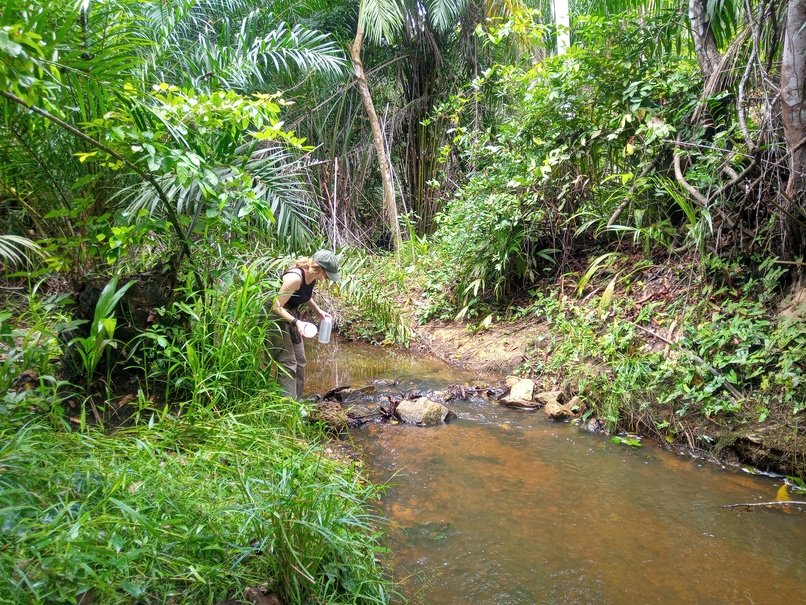
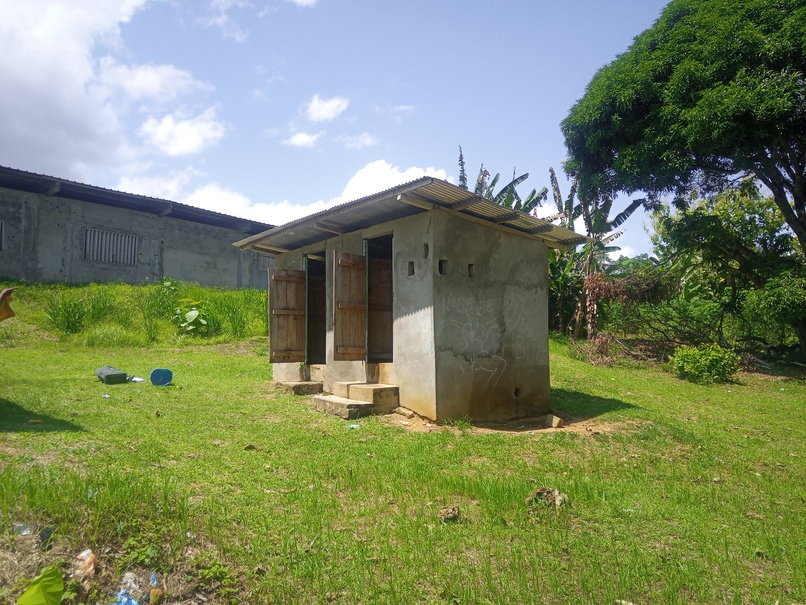
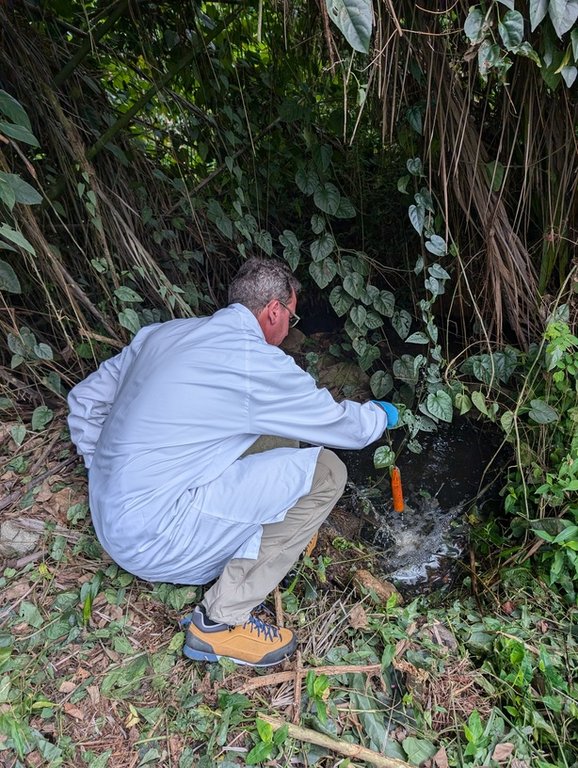
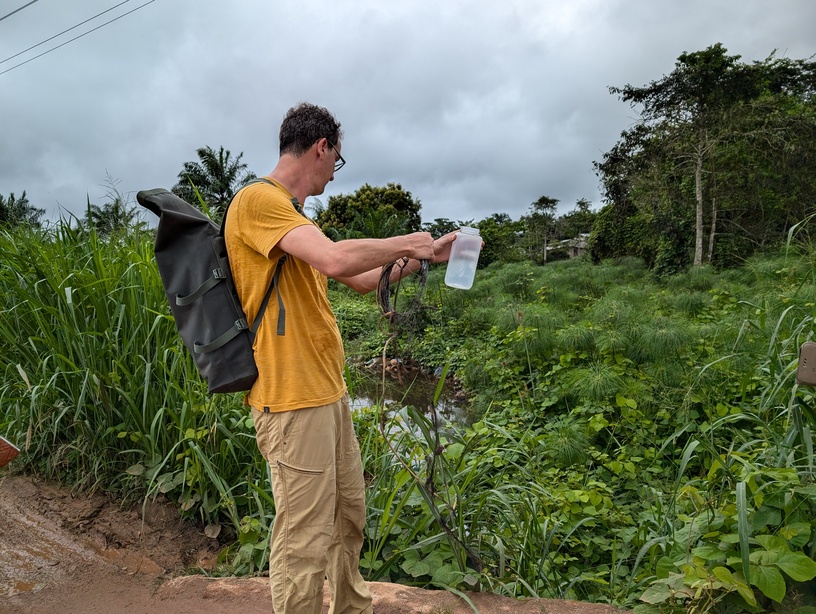
Community-level surveillance posed significant challenges due to the absence of centralized wastewater infrastructure. Public facilities relied on pit latrines, limiting the representativeness and technical viability of conventional WBE approaches. To address this, the project adapted its methodology to open water bodies receiving wastewater runoff. Despite applying large-volume sampling and skimmed milk flocculation, no target pathogens were detected, highlighting the challenges and limitations of current WBE methods in rural contexts.
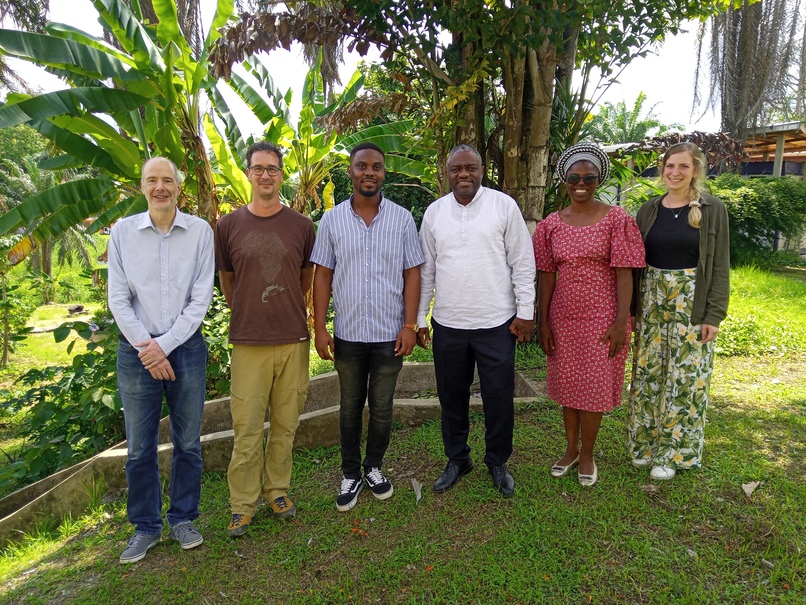
Beyond technical outcomes, the project strengthened collaboration between the Medical University of Vienna, the TU Wien and CERMEL, and built local WBE capacity through hands-on training in Gabon. It also identified future applications for WBE, particularly for Rotavirus A surveillance, which can inform evidence-based vaccine policy in Gabon, a critical step toward improving child health and pandemic preparedness in the region.